
Precision with an Asterisk: The Representation Problem in Cancer Genomics

When a 57-year-old African American woman with cancer received an uncertain result after genetic testing for Lynch syndrome, an inherited condition that increases the risk of colorectal, ovarian, and several other cancers, she described the problem plainly: “As an African American person there wasn’t much research- there wasn’t much data out there…” She had received a variant of uncertain significance (VUS), a genetic change that lacks enough information to know whether it increases a person’s risk of developing cancer.
Her experience reflects a larger issue in cancer genomics. A study of 104,851 people undergoing hereditary cancer panel testing found that 20.4% of those reporting European ancestry received a VUS result, compared to 31.1% of African American participants and 33.2% of those reporting Middle Eastern ancestry. The sequencing technology did not change from one patient to the next. What changed was how much researchers already knew about the genetic variation the test found. Because some populations have been studied more extensively than others, scientists have more comparison data to determine whether certain variants are harmless, disease-associated, or still uncertain.
That imbalance exposes a limitation in one of modern medicine’s most rapidly evolving fields. Precision medicine uses information about a person’s genes, proteins, environment, and lifestyle to better prevent, diagnose, and treat disease. In cancer care, genomic information can help identify tumor subtypes and possible targeted therapies aimed at particular molecular changes. However, precision medicine cannot be equally precise when researchers have far more evidence for interpreting genetic variants in some populations than others. A variant may be easier to classify for one patient simply because similar genetic variation has been studied more extensively in people with similar ancestry.
A 2024 analysis of cancer genomic data from more than 28 million people reported that 89.14% of tumor samples in the datasets studied came from patients classified as White. Asian patients accounted for 7%, African American patients for 0.55%, and Hispanic patients for 0.21%. Within this discussion, it is important to acknowledge that race, ethnicity, and genetic ancestry are not interchangeable categories. Race and ethnicity are social categories that shape lived experiences and exposures, while genetic ancestry reflects inherited patterns of DNA and population history. The National Human Genome Research Institute warns that race and ethnicity are not reliable proxies for genetic ancestry and that ancestry itself should not substitute for environmental or social factors researchers failed to measure. Even so, the distribution still shows how unevenly the evidence base for cancer genomics has been built.
This matters because sequencing DNA and understanding DNA are not the same thing. Finding a variant is only the first step. Researchers still need to know whether the variant appears frequently in healthy populations, whether it tracks with disease, and what biological effect it may have. When some populations have been studied more extensively than others, researchers have more evidence for interpreting the variants observed in those populations.
The All of Us Research Program, led by the National Institutes of Health, shows what broader representation can add. Researchers examining genomic data from nearly 250,000 participants identified more than 275 million previously unreported genetic variants; half of the genomic data came from participants of non-European genetic ancestry. Documenting those variants gives researchers a broader reference for interpreting future genetic tests, helping them distinguish variants that are common and likely benign from those that may be associated with disease. Those variants did not appear when All of Us began sequencing more diverse participants. They were already part of human genetic variation; science had simply failed to document them.
Federal policy has already acknowledged part of the problem. NIH policy requires women and members of racial and ethnic minority groups to be included in NIH-funded clinical research unless there is a clear scientific justification for excluding them. Rooted in the NIH Revitalization Act of 1993, the policy was intended in part to make research findings more generalizable across populations. However, racial and ethnic inclusion does not ensure adequate genetic ancestry representation in genomic datasets because race and ethnicity are social categories, while genetic ancestry reflects inherited patterns of DNA and population history. Federal funders should build on these existing requirements by requiring studies intended to generate broadly applicable genomic knowledge to clearly report who is represented, identify major gaps, and distinguish among race, ethnicity, and genetic ancestry.
That last distinction is especially important. Better representation should not turn into a search for genetic explanations for every racial disparity. A patient’s genome does not become more uncertain because of their ancestry. Our knowledge of that genome does. Until cancer genomics better represents human genetic diversity, precision medicine’s promise will remain uneven. Medicine can only be as precise as the evidence it is built on.
Image Credit
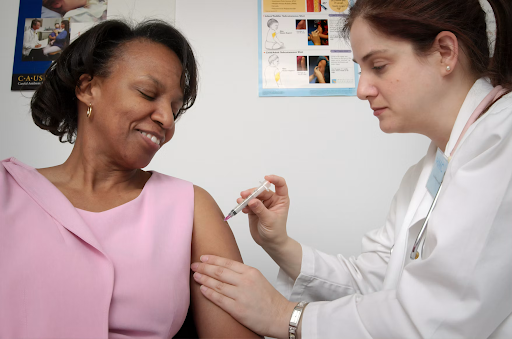
Photo Courtesy of the National Institutes of Health (NIH), All of Us Research Program


Comments