
Trash Talk: The United States Recycling System Needs Reform
America was among the first leaders in curbside recycling. However, it now falls short in global recycling efforts. The current system is outdated. The most recent major recycling reform was when Congress enacted the Resource Conservation and Recovery Act in 1976 to address growing municipal waste. Since then, land waste laws have only become more flexible. In 2018, only 32.1% of municipal waste in the US was recycled or composted. By contrast, in 2022, Germany’s rate of preparing municipal waste for reuse or recycling reached 69%. The National Recycling Strategy uses the 2018 baseline for a goal of a 50% recycling rate by 2030. There is no national recycling mandate, so recycling is mainly addressed at the state level, with some Federal action. Some states have implemented a landfill ban that results in a fine for disposing of recyclables improperly. However, national efforts have not created clear expectations for what materials should be recycled, or an even distribution of punishment for failure to follow Federal law. This system is deeply flawed—inconsistent rules leave many people unsure what they can recycle and skeptical that their efforts make a difference. Other countries, like Germany, have seen comparably higher levels of recycling success because they built a system where recycling is expected, not optional. The US would do well to learn from the German model. The US Federal Sustainability Plan emphasizes developing new technologies for cleaner energy and emission reduction. However, the country first needs to address recycling as a key solution for pollution and waste reduction, as well as a priority for sustainability. Replacing virgin plastic with reused plastic can reduce energy usage by 70%, which also correlates with lowering fossil fuel usage and greenhouse gas emissions.
The efficiency of the German recycling system boils down to two major factors: government enforcement and high levels of public commitment to recycling. Under the Deposit Refund Scheme, certain beverage materials are labelled and recycled accordingly, and citizens receive benefits for sorting correctly. When purchasing recyclable materials, consumers pay a deposit of €0.08 to €0.25. They receive a refund when they return the material, allowing Germany to achieve a 98.4% return rate. Germany’s Packaging Act holds companies responsible for repurposing waste, promoting recyclable packaging, and funding the collection and recycling of the packaging they produce—organizing this effort through strict regulations.
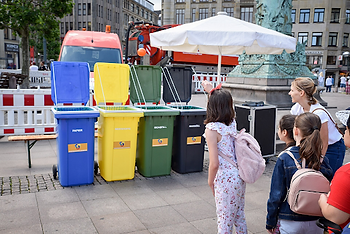
In addition to corporate liability, the public is also held responsible for this effort. Germans are held to a high standard for sorting their recycled materials, with six color-coded categories of trash bins. Yellow is for lightweight packaging, cans, and cartons; brown for compost; blue for paper and cardboard; grey/black for non-recyclables; orange for electronics; and green for glass. Clear sorting rules and refundable deposits make recycling a daily and worthwhile choice for German households, while packaging laws put pressure on producers to manage the waste their products create. Media coverage on the recycling system also emphasizes the presence of societal norms. A 2026 global mobility article reports, “German neighbours take recycling seriously and may approach you directly about sorting mistakes.”
Compared to Germany, the US’s outdated system fails to reach the same level of social and economic commitment to recycling, creating an environment where many Americans are unsure of what they can and cannot recycle and when. I am not perfect either. I often wonder if my coffee cup is recyclable plastic and have no incentive to figure it out if it is not common knowledge. However, it starts with people who care to learn. When people gain a stronger understanding of what they can recycle, they will be more inclined to do so.
While the German recycling system is efficient, Germany is also one of the world’s top plastic manufacturers—and it remains far from achieving zero waste. However, they are taking strides in the right direction. People are not going to stop making plastic, but adjustments must be made to achieve a healthier planet.
The US Government should implement a Federal Recycling Reform, pulling from the effective mandates the German Government has enforced for years. The next step should be a federal law that punishes the placement of recyclable materials in standard waste bins, resulting in the non-return of prepaid investments on materials. Additionally, a standardized packaging law should enforce readable labels on material recycling status. Finally, the US needs standard codes for where different recycled materials should be placed. Of course, it is then up to the government to ensure that after these reforms are made, citizens’ efforts to recycle are met with federal accountability on where the waste ultimately ends up. Through government and societal reform, the US can achieve an effective recycling system and help work toward a renewable and habitable future for all.
Image Credit
Alena Zielinski, Wikimedia Commons



Comments